EXTRAS TO EACH CHAPTER
While the book focuses on George Dixon's personal story, at almost every turn in his journey we encounter a significant event or character in history. I have created this page so that you, as readers, can gain a wider window into George's world. I highlight events and figures that may be less familiar to readers, but provide a unique perspective on the era in which George lived. Also included are photos I collected that were not published in the book. Hopefully these additional pieces will offer the reader a more vivid picture of the characters and settings you encounter in George Dixon's story.
INTRO
Reckoning with Race
"Not everything that is faced can be changed, but nothing can be changed until it is faced."

CHAPTER 1
Life at the End of Campbell Road
"Over the generations, the families dug deep roots along those rocky shores...”


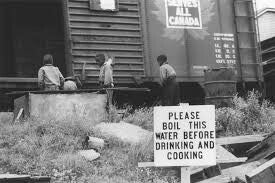


Africville Today: The Ongoing Struggle against Systemic Racism
CHAPTER 2
The Feeling of Freedom
"This ain't my home."

CHAPTER 3
In Search of Home
"God only knows how George managed to survive the three-day journey across the ocean..."

CHAPTER 4:
Black in Indiantown
"Their stories... form a powerful narrative of resilience and determination that has shaped Canada's ongoing journey toward racial justice and equality."
Bromley Armstrong: Community Organizer
Rosemary Brown: Politician and Advocate
Anthony Sherwood: Actor and Activist
BEFORE 'INDIANTOWN': THE STORY OF THE WOLASTOQIYIK
Known as the "people of the beautiful river," the Wolastoqiyik are the Indigenous group whose traditional territory is the Saint John River watershed. The Wolastoqiyik (Maliseet) people inhabited the Saint John River Valley (Wolastoq) for thousands of years prior to European settlement and the development of areas like Indiantown. They occupied the lower river valley, utilizing the watershed, with neighboring Mi'kmaq to the north/east and Peskotomuhkatiyik (Passamaquoddy) nearby.
Who are the Indigenous Peoples of New Brunswick?
- The Three Nations: The Mi'gmaq (northern/eastern NB), Wolastoqiyik (St. John River valley), and Peskotomuhkatiyik (St. Croix watershed) have deep ancestral ties to the land.
- Treaties and Land: Between 1725 and 1779, these nations signed Covenant Chain of Peace and Friendship Treaties with the British Crown. The Mi'kmaq maintain they never ceded land title or rights, a position supported by legal interpretations.
- Colonial Impact: European arrival brought diseases that severely reduced the population. Later, the influx of Loyalists pushed indigenous peoples off traditional lands, leading to the creation of reserves.
- Cultural Resilience: Despite colonial policies aimed at assimilation, such as residential schools, Indigenous communities in New Brunswick have maintained their cultural, political, and spiritual traditions.
- Present Day: There are 32 Indian reserves in New Brunswick, with significant populations in areas like Tobique, Richibucto, and Esgenoôpetitj. The 1999 R. v. Marshall Supreme Court decision reaffirmed treaty rights to hunt and fish.
Reading for Bias
Written in 1905 by W.O. Raymond, a clergy and historian, his account of history illustrates the biases even educated people had toward the culture and history of the Indigenous peoples in Canada.
"With the coming of the whites the scene changes and the simplicity of savage life grows more complicated. The change is not entirely for the better; the hardships of savage life are ameliorated, it is true, but the Indian learns the vices of civilization."
W.O. Raymond
CHAPTER 5:
Band of Brothers
"I dunno if I can stay here my whole life, playin' up and down this road, playin' our music to the same folk every night. We could be famous, George. What d'ya think of that?"
Looking Back: Black Canadians who Influenced Music
The Bohee Brothers
Born in New Brunswick in the 1860s, James and George Bohee became world-renowned banjoists and entertainers. They were pioneers in the music industry, performing for the Prince and Princess of Wales in 1890. The Bohee brothers are recognized as some of the earliest Black musicians to have their music recorded, creating banjo duets on wax cylinder phonographs in the early 1890s.
Oscar Peterson (1925–2007)
Widely recognized as one of the greatest jazz pianists of all time, the Montreal-born musician gained international fame, won eight Grammys, and helped define the jazz genre in the post-war era.
Portia White (1911–1968)
A Nova Scotian contralto who was the first Black Canadian concert singer to achieve international acclaim in the 1940s, performing on the world stage despite racial segregation.
Eleanor Collins (1919–2024)
Known as "Vancouver's First Lady of Jazz," she was a pioneering vocalist who broke racial barriers in the mid-20th century, becoming a trailblazer in Canadian entertainment.
Oliver Jones (b. 1934)
A legendary jazz pianist and vocalist from Montreal who, alongside Peterson, helped establish Canada's reputation for world-class jazz.
R. Nathaniel Dett (1882–1943)
A composer and pianist born in Ontario who was a pioneer in using spirituals as foundations for classical music, achieving high honors in the early part of the century.
Salome Bey (1933–2020)
Known as "Canada's First Lady of the Blues," the American-born singer made a massive impact on the Toronto music scene, writing and performing in musicals.
CHAPTER 6:
The Will to Fight
"Maybe if we bear it now, our sons will stand a little taller."

A MUST READ:


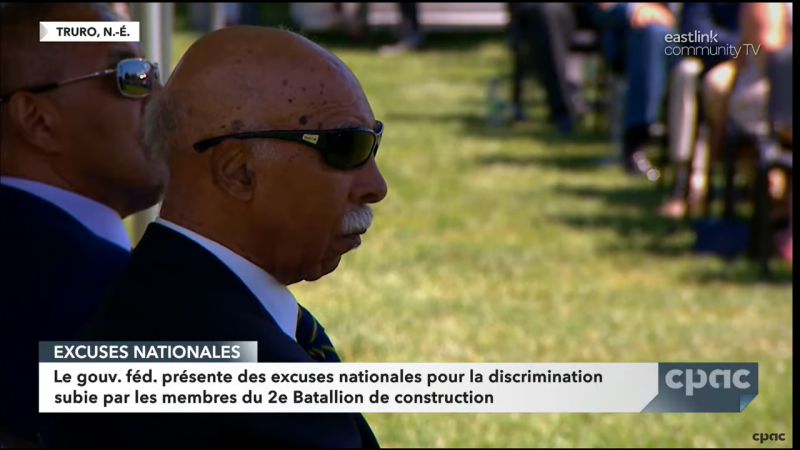
The Black Battalion (1916-1920): Canada's Best Kept Military Secret, is a 1987 book by civil rights activist and Senator Calvin Ruck. It chronicles the history of the No. 2 Construction Battalion, the only all-black unit in the Canadian Expeditionary Force during WWI, highlighting their contributions and forgotten legacy. The book brought to light the racial discrimination faced by Black Canadians who wanted to serve in World War I, as they were initially rejected by many units.
The research in this book was instrumental in bringing this story back into public consciousness and educating Canadians about Black military history. Inside the book, Calvin provides the names of every soldier enlisted in the No. 2 Battalion.
"Lest We Forget."
CHAPTER 7:
The Silent War
The Murder of Michael Jackson

This seventh chapter of A Footnote to Freedom highlights a dramatic turning point in George's life. Due to his fierce sense of loyalty, George gets wrapped up in the suspicious death of a fellow soldier, Private Michael Jackson. This is one of a series of traumatic events that propels George into a dark and depressing state. Unfortunately, the shadows of war haunt George for the remainder of his life.
In the midst of all he faced, the strength of George's loyalty to his comrades cannot be overlooked, nor the memory of those for whom he sacrificed be forgotten. Private Michael Jackson is symbolic of the bonds men at war forged between each other, even as those bods were severely tested at times.
Read more about the life of Private Jackson, as well as the circumstances of his untimely death overseas.
CHAPTER 8:
Life as a Footnote
This chapter of A Footnote to Freedom focuses on the reality most people live each day on the margins of society. Sharing these stories not only amplifies marginalized voices, but become a cathartic process of casting shadows off memories and letting the light of truth heal what was once suppressed and hidden. Stories from the margins are often messy and painful, but out of the lived experiences emerge a wisdom that guides the next generation for the journey ahead.
One of Ours
A Boy from Down Under

A poetic tale of the complexity of reconciliation and belonging through the eyes of a young Haitian-born Indigenous adoptee in Canada, who is prohibited from playing in a basketball tournament for Indigenous youth.
A brief story is told of Muriel's real father, Stanley Goldsmith, a young man who was known to have pant time off the shores of Australia on board the infamous floating 'prison's for delinquent boys. As the book suggests, Stanley was probably not supposed to have landed in Saint John. His stay was brief, but his impact on Muriel was long-lasting, for she always felt an affinity to his Jewish heritage. In my mind, Stanley is a character who deserves a book on his own.
CHAPTER 9:
A Father's Confession

The last known photo of George Dixon.
The Fire in Union Alley
The fire that erupted on the second floor of their tenement house one night in early June, not only destroyed their home, but changed the community forever. Never again did there exist a bond so close among families as they shared on Union Alley. Blair left Saint John shortly after, and it took a lifetime to reconcile with the father with whom he had parted ways in the ashes of that house.